Tudor Cottage
Why Didn't They Ask EvansTudor Cottage is a secluded house at Chipping Somerton associated first with the scheme against John Savage and later with the attempted capture of Frankie Derwent. Its wooded approach, shuttered or unlit windows, and garage become parts of a setting where visitors are lured, watched, or trapped. The cottage’s importance lies not in any stated ownership or history, but in its repeated use as a private stage for plans concealed from the people they target.
Setting and Approach
When Frankie Derwent follows Bobby Jones’s instructions to the cottage, the approach makes the house feel isolated before she reaches it. From the station, she walks in the rain with the directions from his letter in mind. She turns up a steep lane, takes the right-hand fork at the top, and sees the village below, with a belt of pine trees ahead. A neat wooden gate bears the name Tudor Cottage. These landmarks give her a route she can follow, but do not make the destination feel welcoming: no one is about, and the house lies behind the trees.
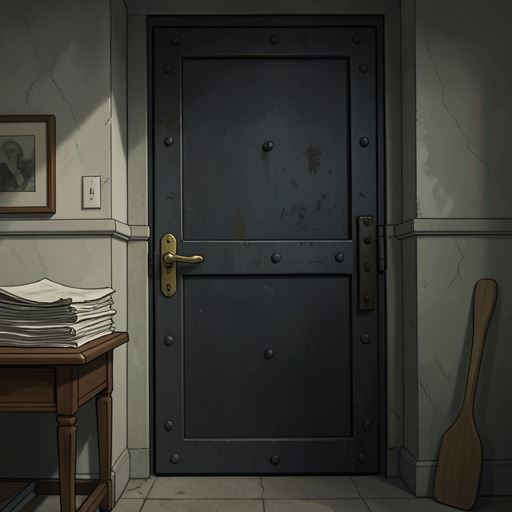
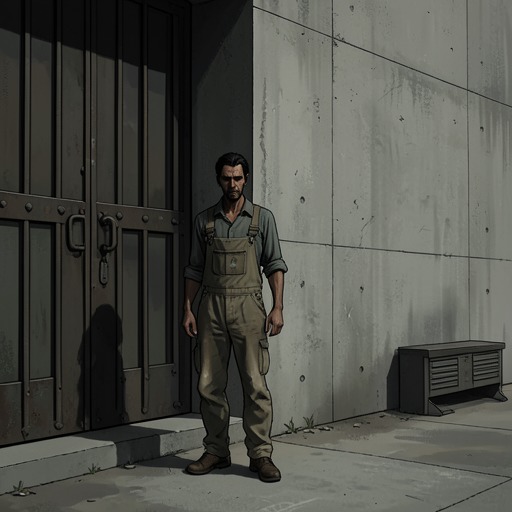
The pines offer Frankie concealment as well as a view. She slips through the gate and waits among them, able to see the outlines of the house. To announce herself, she imitates an owl’s hoot, waits, and calls again. The signal briefly makes the meeting seem governed by a private arrangement between allies. A figure in chauffeur’s dress appears at the cottage door and beckons her inside; Frankie recognizes him as Bobby. Yet the house has no light in its windows, and the scene gives no reassuring sign of ordinary domestic life. The wooded boundary and the dark exterior preserve the secrecy of the meeting while also leaving Frankie exposed as she approaches.
The Cottage and John Savage’s Death Scheme
Tudor Cottage also appears in the earlier story of John Savage and the woman traveling as Mrs Templeton. On a voyage from the United States to England in November of the previous year, the wealthy Savage, who had no near relations, met her and accepted an invitation to visit her cottage at Chipping Somerton. The account given to Frankie Derwent describes him as increasingly under Mrs Templeton’s influence. That cottage visit connected a seemingly private attachment to the plan that would eventually cost Savage his money and his life.
Roger Bassington-ffrench later explains that The Caymans participated in the deception: Leo Cayman acted as the unfeeling husband, helping induce Savage to visit Tudor Cottage more than once. Roger says that the plan was put into operation on Savage’s third visit. The cottage thus belongs to the practical geography of the plot, not just to its romantic pretext. It is the place to which Savage was drawn while Mrs Templeton cultivated his trust; the repeated visits helped make the arrangement seem familiar even as the conspirators prepared their scheme. After the plan succeeded, Moira Nicholson took the money and went ostensibly abroad, but in reality returned to Staverley and the Grange.
The contrast between the two accounts matters. In the version Frankie first hears, Savage’s visits look like the consequence of his attraction to a beautiful woman. Roger’s later explanation reveals the organized deception behind that appearance. The cottage’s quiet, private character allows the conspirators’ arrangement to operate away from public scrutiny, while the repeated journeys there conceal calculation beneath the surface of a personal relationship.
Frankie Derwent’s Arrival and Ambush
Frankie arrives believing Bobby Jones has summoned her because he is on the trail and needs her help. His letter directs her to travel by train rather than by the conspicuous Green Bentley, tells her to come to Tudor Cottage, and insists that she tell no one. She follows the directions carefully, keeping them in her head and checking the letter once more under the station lamp. The secrecy appears to protect their investigation; in fact, the letter brings her alone to the place where an ambush is waiting.
After the chauffeur-dressed figure beckons her in, Frankie calls softly for Bobby. Before she can establish that the man is really there, a familiar, heavy-sweet smell warns her that something is wrong. She recognizes it as chloroform just as strong arms seize her from behind and a wet pad is pressed over her mouth. She struggles, kicking and twisting, but the fumes overwhelm her and she loses consciousness. The cottage’s dark entrance, which had first served as the threshold to a clandestine meeting, becomes the point at which her trust in Bobby’s message is turned against her.
Garage, Surveillance, and Narrative Significance
The cottage’s garage provides a second, distinct kind of enclosure. Badger Beadon has hidden beneath rugs in the back of a car, intending to surprise Bobby Jones. Instead, a stranger in chauffeur’s dress emerges from the pub, gets into the car, and drives away. Badger finds the man’s face vaguely familiar but does not recognize him. Once the car reaches Tudor Cottage, the chauffeur leaves it in the garage and shuts the doors, accidentally making Badger a prisoner inside.
From a small side window, Badger later sees Frankie approach, make her signal, and enter the house. The sight turns his confusion into suspicion: something is wrong, and he decides to investigate. Using tools in the garage, he picks the lock and gets out. With the ground-floor windows shuttered, he considers climbing onto the roof to look through an upper window. The evidence establishes this as his plan, rather than confirming what he finds there. Even so, his accidental presence supplies a counterpoint to Frankie’s isolation: while she has been deceived into entering the house, Badger observes the approach from a separate, confined space and tries to act on what he sees.
Across these episodes, Tudor Cottage repeatedly gathers people into a concealed arrangement whose real purpose is not apparent to its visitors. Savage is drawn there through Mrs Templeton’s influence; Frankie follows instructions that seem to come from Bobby; and Badger reaches it by accident, only to be locked in the garage. The house’s trees, darkness, gate, and enclosed outbuilding are concrete features of the action, but they also organize what each person can know. At Tudor Cottage, the same promise of privacy that helps a plot remain hidden makes its visitors vulnerable to deception.